In Poker What Is Big Blind Small Blind
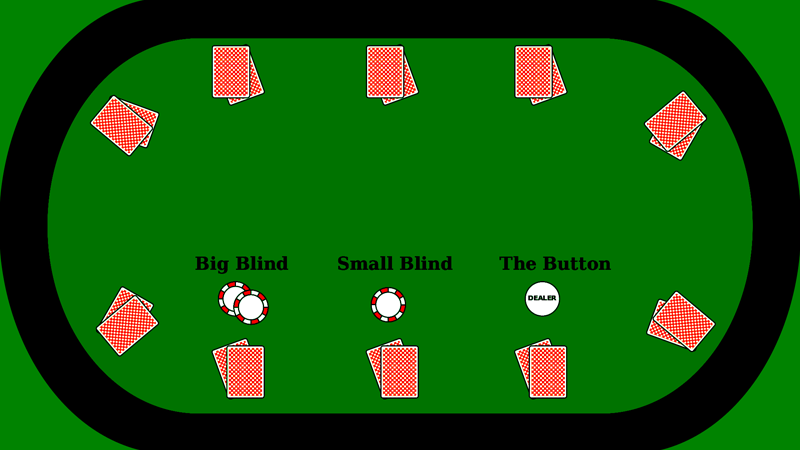
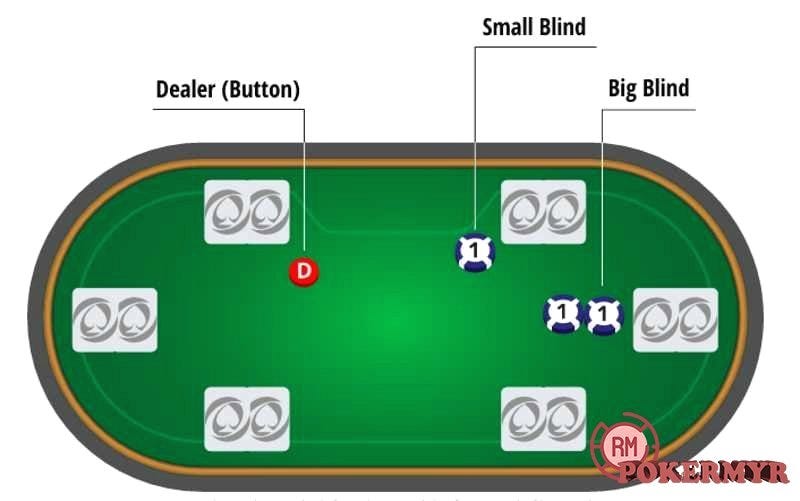
In order to start betting in Hold’em, forced bets (known as blinds) are made by the two players immediately clockwise from the dealer button. The person immediately clockwise from the dealer has the small blind, and the next player clockwise has the big blind. Making blind bets is known as posting and this is done before any cards are dealt.
In Poker What Is Big Blind Small Blind Visually
The rules of Everest Poker are as follows the first player bets the small blind and the second bets the big blind, the following players can fold, call, or raise the bet. Big Blind Bet In Texas Hold Em Poker n Texas Hold'em, the big blind bet, otherwise known as the BB, is a full-sized bet that gets placed to start the first round of play. It's not pondered over, and neither is the other blind bet, the small blind.
There are mainly two blinds in Texas Holdem – the big and small blind, but there can sometimes be three players who have to make them. The name comes from the fact that players are being asked to bet without seeing their hands. They are betting blind, with no knowledge of the hand’s worth. The big blind is equivalent to a small bet. The small blind is placed by the person to the left of the dealer button. Most of the time, the SB is one-half the amount of the big blind bet, although there are times when the small blind bet will be a little less than half.
The size of the bets are determined by the limits of the game that you’re playing and the small blind is nearly always half of the big blind. So a $2/$4 Limit Hold’em game has a small blind of $1 and a big blind of $2.
Blinds are forced bets. The players in these positions must make these bets or they aren’t dealt cards in the hand. These blinds, in turn, force betting action on the table after everyone has been dealt their hole cards.
At a casino, when you first sit down at a Hold’em table, the rules vary as to whether you have to post blinds (even if you’re out of the normal blind positions for that hand) in order to be dealt a hand.
In Las Vegas, you’re dealt a hand as soon as you sit down and have shown that you meet the table’s minimum buy-in. You’re not required to post a blind in order to get hole cards. Conversely, in most California card rooms, you’re required to post a big blind in order to get your starting hand.
In cases where you’re required to post a big blind before you’re dealt cards, you’re mildly better off just waiting until it would normally be your turn to get the big blind anyway, rather than jumping straight into the hand. Waiting like this keeps you from making an extra forced bet and gives an added bonus of being able to case the players at the table while you aren’t actually playing. Dealers are used to this behavior and will probably ask you if you want to sit out (that is, wait until it’s your turn to post the big blind).
In Poker What Is Big Blind Small Blind Button
How soon you post is a fine point, though, that doesn’t really make that much difference. If you’re itchin’ to play, or if you have a very limited amount of time to play, go ahead and jump in. The dealer will tell you whether you’re required to post a big blind.
Blind leakage is an exceptional video by James 'SplitSuit' Sweeney that covers everything you need to know about profitable blind play (both in the SBandBB) in Texas Hold'em cash games.
The small blind is a very tricky position to play from in Texas Hold'em. If you were to track your performance in each position at the table using a program such as Poker Tracker, you will find that the small blind is a losing position overall.
The best players in the world find it difficult to win money from the small blind, and that's just the way it is.
When playing in the small blind our aim is to try and reduce the amount of money we will lose, so that we can increase our overall wins from the other seats at the table.
The problem with playing in the small blind.
The fundamental reason as to why the small blind is such a difficult and losing position in the hand is due to the fact that we are going to be first to act in every round after the flop. Being out of position means that our opponents will get to see how we act before they do, giving them more information on the strength of our hand than we have on theirs.
This will put us at a big disadvantage throughout the hand, as any experienced player knows how important a role that position plays in poker, especially in Texas Holdem.
Therefore we should know that when playing from the small blind, we are going to be on an uphill struggle throughout the hand. So a good small blind strategy would to not embark on this struggle in the first place, and simply fold before the flop. If we do intend to get involved when in the small blind, we will want to have a very strong starting hand to compensate for the fact that we are going to be out of position for every round after the flop.
Using starting hand selection to save money in the small blind.
By using solid starting hand selection we can increase our chances of winning the hand despite the fact that we are out of position. Even though the small blind may be a losing seat overall, it does not mean that we will lose money on every individual hand that we play from that particular position. So don’t be afraid to enter a pot if you have a strong enough hand to do so, but always remember to tighten your starting hand requirements when in the small blind.
A common small blind strategy mistake.
A big mistake when playing in the small blind is being under the notion that its worth seeing a flop for a little extra, as half of your blind is already in the pot. However, whilst having half of your blind in the pot does improve the pot odds you have to call, there is the possibility that you are setting yourself up for bigger losses than you might expect.
The extra half a bet that you have to call to see a flop may look innocent, but in real fact it is a very dangerous play, especially for the less experienced players. The big losses do not lie in the extra half a bet lost on every flop that we miss, but in the hands where we have half a holding, and put more money in the pot than necessary to try and find out if we are ahead.
Never feel committed to a pot simply because you have paid your blind. It is not profitable to try and protect money you have put in the pot through the blinds, so play the hand like any other.
Playing in the small blind example.
Let say we are in the small blind and there have been a few limpers before us. We look down and see that were are holding K 7. This looks like a half decent hand and so we decide to call because it’s only half a blind more to see a flop.
The flop comes down 9 T K giving us top pair with a 7 kicker, not a bad hand.
Having top pair we decide to bet out around ¾ of the pot to see how the other players react. A few players fold, but an opponent in one of the later positions raises us 3 times our original bet, and the action is now back onto us.

In this situation our opponent could have a range of hands; they could have a king with a worse kicker, or a king with a better kicker. They may have two pair, a set, or even a straight or a flush draw. There are so many possibilities and we have little information on which hand he could have because we are out of position. But seeing as we have a half decent hand we decide to call.
The turn makes the board 2, which doesn't improve our hand and probably made little difference to our opponent's.

Because we are a little unsure about the strength of our hand we decide to check, and our opponent then comes out with a pot-size bet. Now we are still unsure if our opponent does have a better hand, or whether he is just exploiting our weakness because we checked. However, by this time a pot-size bet is quite large, so we decide to let the hand go and cut our losses.
Small blind example evaluation.
When reading through the hand above you probably recognized the situation all too well. Having a half decent hand but coming up against strength from another opponent and being out of position is all too common.
These situations are difficult to play because we have so little information on our opponents and we can never be sure if we do have the best hand. In the hand mentioned above, this problem could have easily been avoided by folding pre-flop, saving us a decent amount of money in the process.
The poor position in this hand has caused us a lot of problems, and it always will when you are playing from the small blind.
Although K 7 looks like a reasonable hand, it just proves to be the type of hand that is going to cause us problems after the flop if we hit any part of it. So if we are determined to enter a pot when calling from the small blind, we have to play cards that have potential to hit a very big hand.
By sticking with cards like suited connectors and pocket pairs, we will either hit a big hand or we wont, which saves us the trouble of deciding what to do after the flop. A marginal hand is the last thing we want to hit when out of position, so don’t try and put up a battle with them and be prepared to let them go when you come up against action.
Small blind strategy evaluation.
The small blind is a very tricky position to play from, so we should try and avoid entering too many pots from this position unless we have a premium hand. Calling from the small blind will usually cause more problems than it is worth, so try and avoid doing so unless you have a hand that has some potential.
The small blind is the worst position to be in, so don’t expect too much from the hand because you are always going to be at a disadvantage to ourself money in the long run if you folded every marginal hand instead of calling.
Related articles.
Go back to the awesome Texas Hold'em Strategy.
Comments